Lawn
Lawn aeration and dethatching: two jobs, two seasons, two quotes
Aeration pulls plugs of soil so water and air reach the roots. Dethatching pulls up the dead layer at the soil line. They are done with different machines, and a quote should say which one it means.
By LawnElm Editorial Team Updated 7 min read
- Priced by
- Square foot, or the lawn
- Season
- Fall cool; summer warm
- Do it yourself?
- Partly; rent a machine
Short version
Aerate and dethatch when the grass is actively growing, so it recovers. That is fall for cool-season grasses and summer for warm-season grasses, according to the extension services read here. Thatch becomes a problem past half an inch. Utah State calls core aeration the most beneficial option and describes dethatching as stressful for turf. Measure the lawn with the lot to lawn tool before you ask for quotes.
Two jobs, not one
Thatch is a layer of living and dead stems and roots between the green blades and the soil. Colorado State says to try to slow its buildup once it is thicker than half an inch, and Utah State says up to half an inch is acceptable, while thicker layers keep roots from reaching the soil. Michigan State says half an inch or less is normal and useful, and that it is time to act when it passes an inch.
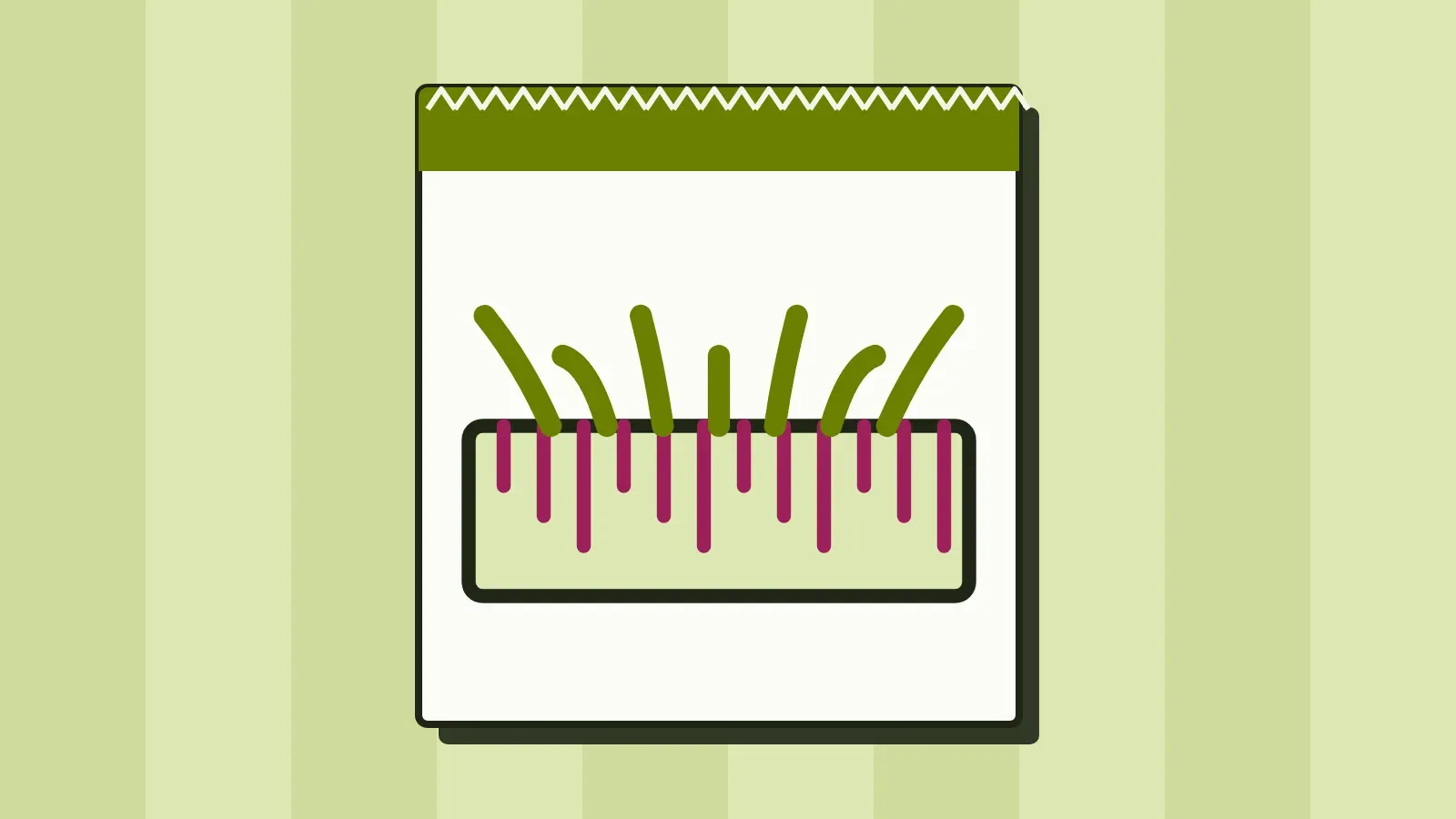
- Core aeration pulls out plugs of soil. Michigan State says it reduces soil compaction and creates channels for water and gas exchange, and that it removes some thatch. Colorado State says a machine with half-inch tines removes about 10 percent of thatch when its passes leave about 2 inches between holes.
- Dethatching pulls up the thatch with a power rake or vertical mower. Michigan State says it removes more thatch in one operation, is very aggressive and leaves debris to rake up. Utah State says it is stressful for turf, and should mainly be used to prevent buildup. Once thatch is thick, Utah State says core aeration is the better choice.
Solid tines or spikes are not aeration. The University of Maryland says equipment with solid tines or spikes should not be mistaken for aerating equipment. Ask whether the quote means plugs removed, or something else.
When it is done in each belt
| Belt | What the publication says | Source |
|---|---|---|
| Cool belt | Fall is the time for aerating or dethatching | Michigan State |
| Transition belt | Cool-season lawns in fall; warm-season lawns in June and July | Maryland |
| Warm belt | Late spring and summer, while the grass is actively growing | Clemson |
| Dry West | Cool-season: spring and fall, late summer to early fall preferred; warm-season: summer | Utah State |
The common thread is active growth. The University of Maryland says to aerate when the desirable grasses are growing vigorously, never a dormant lawn, and Clemson says to pick a day with mild temperatures and moderately moist soil. Colorado State and Michigan State give no months for their advice, so ask your county extension office for the dates in your area.
How often depends on the lawn. Utah State says once a year is usually enough for a home lawn. Maryland gives every one to two years for heavy foot traffic and every two to four for home lawns, and Clemson says it depends on soil and traffic, from once every couple of years to two to four times a season on high-traffic or low-tolerance grasses such as centipedegrass and St. Augustinegrass. Clemson suggests probing with a screwdriver: resistance may mean the lawn needs aeration.
What it covers and how it is measured
Both jobs are measured by the lawn area in square feet. Use the lot to lawn tool to subtract the house, drive, walks and beds from the lot, so a quote for a quarter acre is not counting areas the machine never touches. Crews usually quote aeration by the square foot or by the lawn, and dethatching separately. The yard budget adds up the quotes you type in.
If you also plan to seed, the two jobs share one pass. Iowa State's method for overseeding in fall is to make three or four passes with a core aerator until there are 20 to 40 holes per square foot, then spread seed. See lawn seeding and overseeding.
How it is done
- Pick the day. Maryland says the soil should be moist but not wet, and to water first if it is dry. Clemson says aerating wet soil is messy and can compact it more.
- Use a core aerator. Maryland describes plugs about half to three quarters of an inch wide and 2 to 4 inches deep. Colorado State gives plugs 2 to 3 inches long. Clemson says to go over the lawn twice, in perpendicular directions.
- Leave the plugs. Maryland says they decompose in a couple of weeks, and Utah State says to break them up with a rake or mower. Clemson says to leave them or rake them in.
- Mark what is buried. Michigan State lists not marking irrigation lines, invisible dog fence wire and other wiring as a mistake, along with digging too deep. Mark them before you rent a machine or before the crew arrives.
- Dethatch lightly. Colorado State says light raking helps if done often, and that deep raking can damage living turf. Utah State says the blades should not be set to touch the soil.
Herbicides, seed and feeding
Order matters. Clemson says aerating breaks the protective layer of a pre-emergent herbicide, so apply a pre-emergent after aerating, not before. For warm-season lawns, Clemson also says to wait about a month before seeding after coring unless you combine the two, in which case it says to make six to 10 passes. Illinois says that when you core aerate or dethatch alongside herbicides, follow the label. See lawn weed control.
Thatch builds faster when the lawn is overfed or overwatered. Utah State names too much fertilizer, too much water or both as the usual cause, so check lawn fertilizing and lawn watering and irrigation if thatch keeps coming back.
What a written quote should say
- Which job it is, core aeration or dethatching, and the lawn area in square feet
- The tine size and plug depth, and the number of passes
- Whether plugs are left on the lawn or hauled away, and who rakes up dethatching debris
- Whether the crew marks irrigation heads and buried wires, and who is responsible for damage
- Whether seed or fertilizer is part of the visit
- The planned month, tied to your grass type
More on comparing quotes is in how to hire a lawn crew. LawnElm publishes no prices.
Mistakes to avoid
- Aerating a dormant lawn, or wet or dry soil, per Maryland and Clemson
- Setting dethatching blades into the soil, when Utah State says they should not touch it
- Using spikes or solid tines and calling it aeration
- Putting down a pre-emergent first and then breaking it with the aerator
- Hitting sprinkler heads or buried wire
Do it yourself or hire it out
A small lawn is a workable do-it-yourself job with a rented core aerator, which is heavy and has to be loaded and returned. Hiring suits a large lawn or a lawn with sprinkler lines. For a thick layer of thatch, ask a crew or your county extension office before you rent a power rake, since Utah State says dethatching stresses the turf.
Questions people ask
What is the difference between aeration and dethatching?
Aeration pulls plugs of soil so water, air and fertilizer reach roots. Dethatching pulls up the layer of dead stems and roots at the soil line. Michigan State says dethatching removes more thatch in one pass and is very aggressive, so they are separate quotes.
When should I aerate my lawn?
When the grass is actively growing. Michigan State gives fall for cool-season lawns, and the University of Maryland gives June and July for warm-season lawns. Clemson says late spring and summer for warm-season grasses.
How thick is too much thatch?
Colorado State says to try to slow buildup once thatch passes half an inch, and Utah State says up to half an inch is acceptable. Michigan State says it is time to act past an inch.
Should I bag the plugs?
Extension services say to leave them. Maryland says they decompose in a couple of weeks, and Utah State says to break them up with a rake or mower.
Can I aerate and seed at the same time?
Yes, for fall overseeding. Iowa State's method has you aerate first, then drop seed. Clemson says for warm-season lawns to make six to 10 passes if you combine the two.
Sources
- Core aeration and dethatching of lawns (Michigan State University Extension, 2009)
- Turfgrass cultivation (aerification) (Utah State University Extension, 2011)
- Lawn aeration (University of Maryland Extension)
- Lawn aeration for warm-season lawns (Clemson Home and Garden Information Center)
- Lawn Care Basics, 7.202 (Colorado State University Extension)
- Overseeding a lawn (Iowa State University Extension)
- Managing crabgrass in lawns (University of Illinois Extension)
Timing and thickness figures come from the extension publications above and were checked on November 20, 2026. The Michigan State article is from 2009 and the Utah State fact sheet is from 2011, so treat their timing as general advice and confirm it with your county extension office. The Maryland page was updated in March 2023 and the Colorado State fact sheet was reviewed in August 2025.
Next in the yard
-
Yard job
Lawn seeding and overseeding
When to seed in each grass belt, how seed meets soil, and how much to buy.
-

Yard job
Lawn fertilizing
When to feed cool- and warm-season lawns, how to size a feeding, and what rules apply.
-

Guide
How to hire a lawn crew
Licenses, insurance and written quotes to check before a lawn or landscape crew starts work.