Cool belt
Alaska yard facts: grass, short season and the rules that apply
Alaska lawns are cool-season grasses on a short summer. Seeding, feeding and mowing all happen between late spring and early fall. Here is how that shapes the jobs, and who regulates the work.
By LawnElm Editorial Team Updated 5 min read
- Grass belt
- Cool-season
- Common grasses
- Bluegrass, red fescue
- Spray for hire
- Certification required
Short version
The University of Alaska Fairbanks Cooperative Extension recommends Kentucky bluegrass and red fescue for Alaska lawns and gives a mowing height of 3 inches. The Alaska Department of Environmental Conservation certifies pesticide applicators, and its turf and ornamental category covers people who use pesticides on a client's lawn. Alaska 811 lists 2 business days of notice before you dig, or 10 in remote locations.
Alaska at a glance
Grass and climate
The University of Alaska Fairbanks Cooperative Extension recommends Kentucky bluegrass and red fescue for Alaska lawns. For bluegrass, it names Nugget as the most highly recommended variety and lists Merion, Park and Fylking as other suitable ones. For red fescue, it says Arctared is the most cold tolerant and can be used throughout the state, while Boreal should not be used north of the Alaska Range.
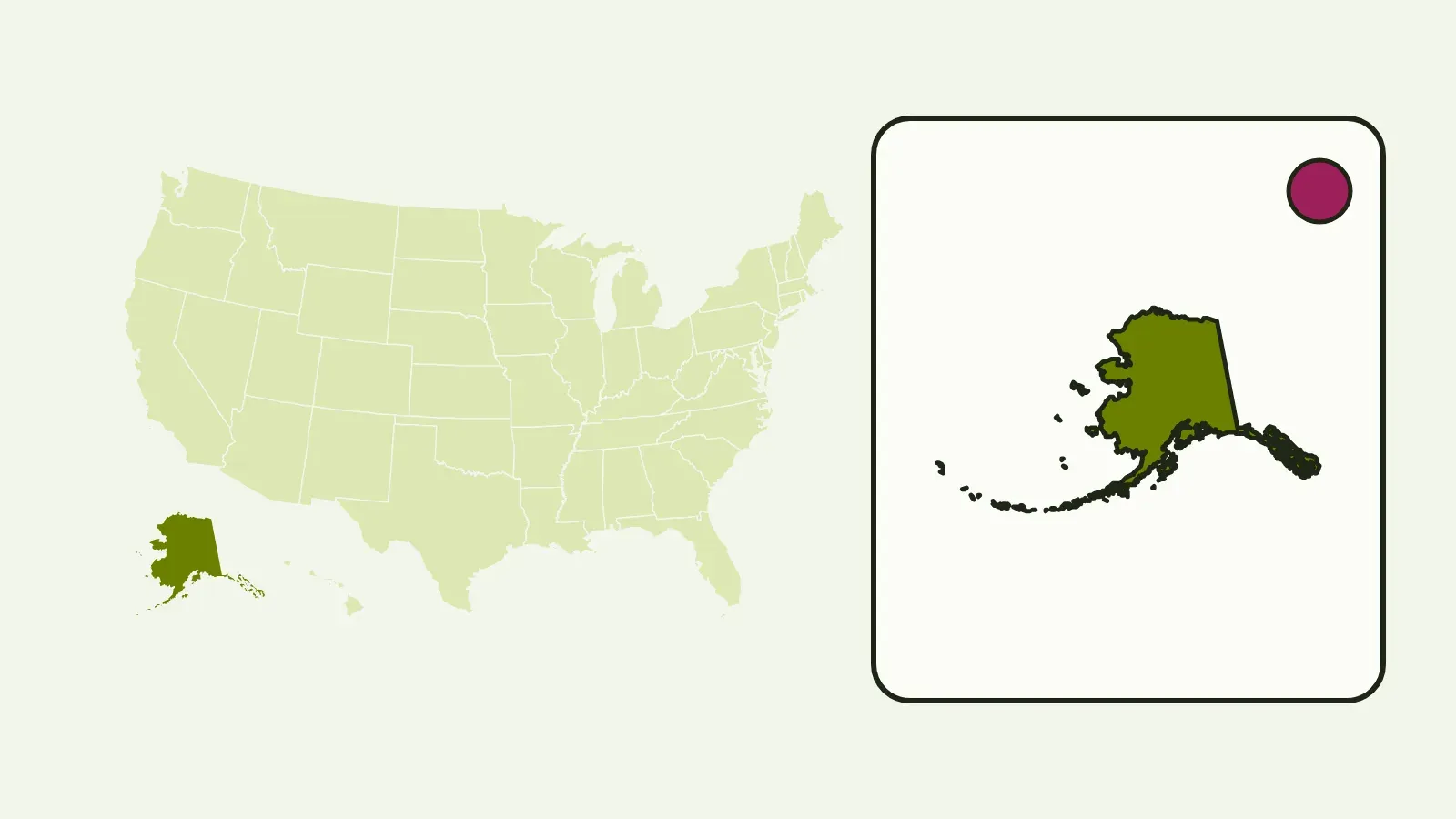
Extension publishes separate lawn guides for Southcentral and Interior Alaska and for Southeast Alaska. If you are not sure which applies to your yard, ask your local extension office. Both recommended grasses are cool-season, so Alaska sits in the cool belt on the state map.
Mowing and feeding
UAF Extension says to mow to 3 inches and never remove more than about a third of the blade in one mowing. Highly fertilized lawns may need mowing twice a week, while less fertilized lawns may need it only every 1.5 to 2 weeks. The lawn mowing page explains the one-third rule.
For feeding, UAF Extension says most Alaska lawns need at least two applications a year of a 22-11-11 fertilizer. Its extension guide for Southcentral and Interior Alaska suggests a minimum of 5 pounds of 22-11-11 per 1,000 square feet in spring and again in late summer. It also gives a four-application schedule for a heavily fed lawn, from late May to late August or early September. Soil analysis should set the real amount. The lawn supplies tool turns a label rate into bags.
| When | Fertilizer grade |
|---|---|
| Late May | 22-11-11 |
| Late June | 22-4-4 |
| Late July | 22-4-4 |
| Late August or early September | 8-32-16 |
Extension adds that most Alaska lawns need about half an inch to 1 inch of water a week, and that a thatch layer more than half an inch deep should be removed. It also says most Alaska lawn grasses grow best at a soil pH of 6.0 to 6.5, which a soil test can check before you buy lime or fertilizer. The schedule above is for what UAF calls a premium lawn. A lawn you feed less will grow slower and need fewer mowings.
Who regulates what
The Alaska Department of Environmental Conservation (DEC) certifies pesticide applicators. Its category 04, turf and ornamental pest control, is for applicators who use pesticides to control outdoor pests on landscaping or lawns. DEC's own example is a groundskeeper who uses weed and lawn feed products on a client's lawn. DEC says certification is required when you use or supervise pesticides on property other than your own. If a crew sprays your lawn, ask for its certification.
The sources reviewed for this page did not state a statewide limit on how much fertilizer a homeowner may put on a lawn. Follow the label and the Extension rates, and check with your borough or city.
Alaska Digline, the state's one-call center, lists 2 business days of notice before digging, or 10 business days in remote locations. Call 811 or 800-478-3121. Read call 811 before you dig before you plant a tree or set a fence post.
Local rules and hiring
Boroughs, cities and homeowners' associations can set their own rules for yard work, fences and trees. They vary by place, so ask before a project. The HOA and city yard rules guide lists what to ask.
Mowing and basic yard work are not covered by the pesticide certification, but spraying for a client is. Get the scope and the certification number in writing. The guide to hiring a lawn crew lists what a written quote should say.
Questions people ask
What kind of grass do Alaska lawns have?
Cool-season grasses. UAF Cooperative Extension recommends Kentucky bluegrass, with Nugget as its top pick, and red fescue, with Arctared the most cold tolerant.
How tall should I mow an Alaska lawn?
UAF Extension says to mow to 3 inches and never take off more than about a third of the blade in one mowing.
Does a company need a license to spray my lawn in Alaska?
DEC says certification is required to use or supervise pesticides on property other than your own. Its turf and ornamental category covers pesticide use on a client's lawn. Ask the crew for its certification.
How many days before I dig do I have to call 811?
Alaska Digline lists 2 business days of notice, or 10 business days in remote locations. Confirm with Alaska 811 before a large project.
Sources
- Establishing and Maintaining a Lawn in Southcentral and Interior Alaska (UAF Cooperative Extension Service)
- Lawn Maintenance and Pesticides (UAF Cooperative Extension Service)
- Applicator Categories (Alaska Department of Environmental Conservation)
- Becoming Certified (Alaska Department of Environmental Conservation)
- Alaska (811 Before You Dig)
Checked on November 20, 2026. Licensing rules and local ordinances change; confirm with the Alaska Department of Environmental Conservation and your borough or city before you hire or spray.
Next in the yard
-

Yard job
Lawn mowing
How tall to mow, how often, and what a weekly visit includes.
-

Guide
How to hire a lawn crew
Licenses, insurance and written quotes to check before a lawn or landscape crew starts work.
-

Guide
Call 811 before you dig
How the free 811 locate works, why notice periods differ by state, and who calls when a crew digs.