Transition belt
Arkansas yard facts: grass, season and the rules that apply
Arkansas lies in the transition zone, where summers can be too hot for cool-season grass and winters too cold for some warm-season grass. Here is how that shapes the jobs, and who regulates the work.
By LawnElm Editorial Team Updated 6 min read
- Grass belt
- Transition
- Common grasses
- Bermuda, zoysia, fescue
- Spray for hire
- License required
Short version
The University of Arkansas Division of Agriculture says Arkansas lies in the transition zone. Bermudagrass and zoysiagrass are adapted statewide, St. Augustinegrass and centipedegrass do best in the southern third, and tall fescue does best in the north. The Arkansas Department of Agriculture's Pest Control Program says anyone who performs pest control for compensation, including treating lawns and turf, must be licensed or certified. Arkansas 811 is reached at 811 or 1-800-482-8998.
Arkansas at a glance
Grass and climate
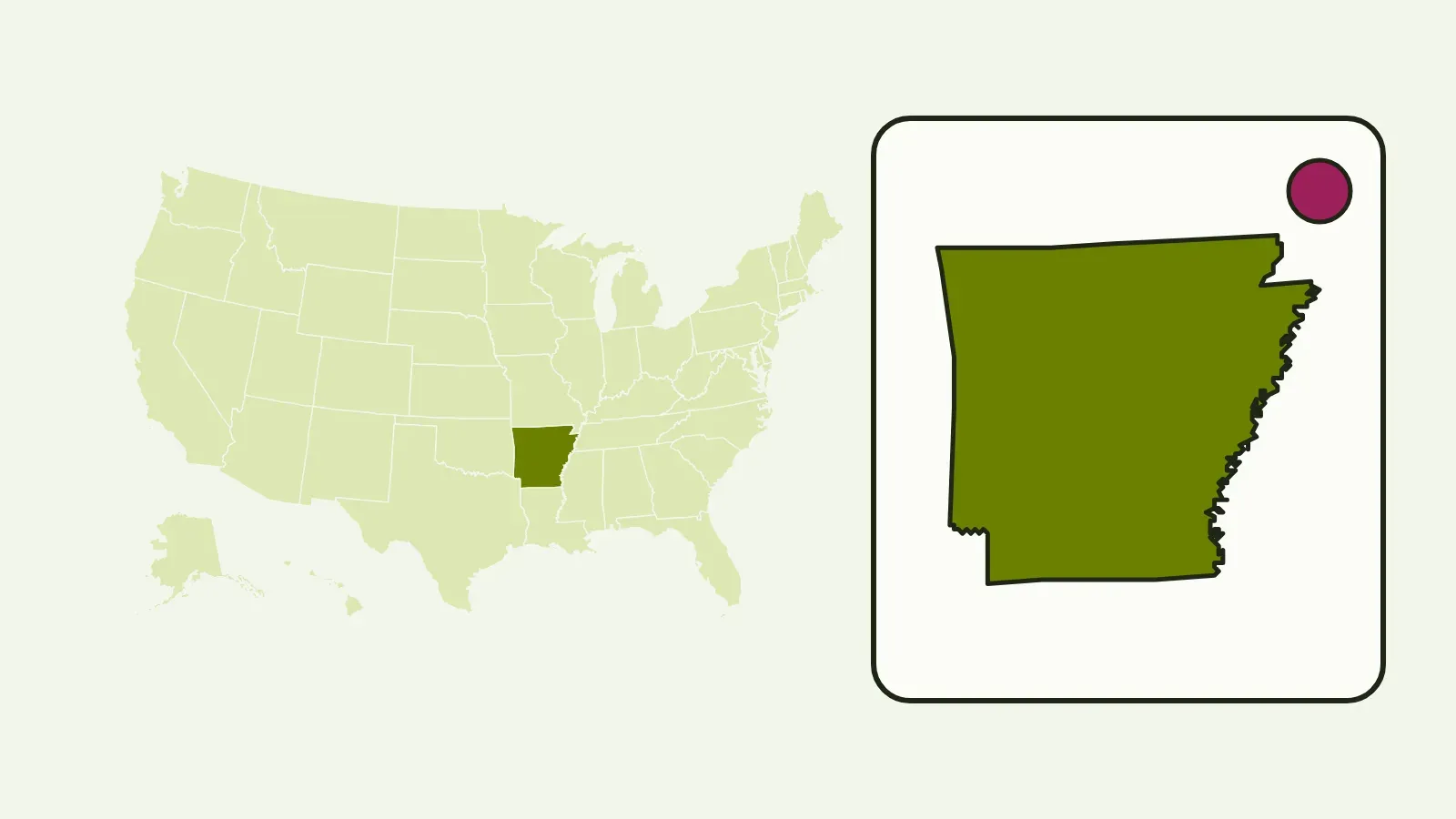
The University of Arkansas Cooperative Extension Service says plainly that Arkansas lies in the transition zone. Summer heat is hard on cool-season grasses, and winters can injure warm-season grasses. That is why Arkansas sits in the transition belt on the state map, and why the right grass depends on where in the state your yard is.
- Bermudagrass and zoysiagrass are adapted statewide, according to the extension guide to choosing a grass for Arkansas lawns.
- St. Augustinegrass and centipedegrass do best in the southern third of the state. The guide says St. Augustinegrass reaches Little Rock and centipedegrass reaches Searcy, and that injury to St. Augustinegrass is likely where temperatures dip below 10 degrees F.
- Tall fescue is the most common cool-season grass. It does best in north Arkansas but can be grown in the central part of the state. Kentucky bluegrass is limited to the north, and ryegrass is used for temporary cover or overseeding.
Cool-season grasses grow best in spring and fall at 60 to 75 degrees F. Warm-season grasses grow best at 80 to 95 degrees F, are slow to green up in spring and go dormant after the first heavy frost. The guide says buffalograss is not recommended except on some lawns that are not irrigated. Your county extension office can say which grass has held up in your neighborhood before you seed or sod.
Mowing and feeding
The extension guide recommends a high cutting height for home lawns. The one-third rule applies to every grass; see lawn mowing for how it sets your schedule.
| Grass | Kind | Mowing height |
|---|---|---|
| Bermudagrass | Warm-season | 0.5 to 2 inches |
| Zoysiagrass | Warm-season | 1 to 2 inches |
| Centipedegrass | Warm-season | 1.5 to 2 inches |
| St. Augustinegrass | Warm-season | 2.5 to 4 inches |
| Tall fescue | Cool-season | 2.5 to 3.5 inches |
| Kentucky bluegrass | Cool-season | 2.5 to 3.5 inches |
The extension bermudagrass calendar says to mow every 5 to 7 days in summer and to mow at the recommended height once the grass greens up in March to May. It says a lawn that is dormant and not overseeded needs no mowing from December to February. The tall fescue calendar says to mow every 5 to 7 days in summer at 3 inches or higher, and to lower the mower gradually in fall.
For feeding, the extension fertilizing guide lists a yearly nitrogen range and a timing window for each grass. It also says never to apply more than 1 pound of nitrogen per 1,000 square feet in one application unless at least half of the nitrogen is slow-release.
| Grass | Pounds N per 1,000 sq ft a year | Timing |
|---|---|---|
| Bermudagrass | 3 to 5 | May to September |
| Zoysiagrass | 1 to 2 | June to August |
| Centipedegrass | 1 to 2 | June to August |
| St. Augustinegrass | 1 to 3 | June to August |
| Tall fescue | 2 to 4 | April, September and November |
That fertilizing guide carries a 2007 revision code, so treat its rates as a starting point and confirm them with your county office. It says soil testing is free through county extension offices, and that about 86 percent of Arkansas lawn soils have enough phosphorus, so it suggests low-phosphorus or no-phosphorus fertilizer for those lawns. The extension calendars add dates: crabgrass preventer in late February or early March, and overseeding tall fescue in September and early October. Turn a label rate into bags with the lawn supplies tool.
Rules for spraying and fertilizer
The Arkansas Department of Agriculture's Pest Control Program says anyone performing pest control for compensation must be licensed or certified, and it describes pest control as including treating lawns and turf for insect and weed pests. The program issues a commercial license to businesses that offer pest control services, with a licensed operator who supervises the work. Classification 4 is listed as ornamental tree and turf pest control, and classification 5 is weed control only.
The same page says property owners and employees working on their employer's property are exempt unless they use restricted use pesticides. It does not say anything about fertilizer, and the University of Arkansas publications listed below give fertilizer rates as advice, not as law. They do not state a statewide limit on how a homeowner or a crew applies lawn fertilizer, so check with your city and your HOA.
The sources listed below do not describe a separate state license for a mowing or landscaping crew. Mowing and basic yard work are not the same as spraying, so ask any company that offers weed or grub treatments for its license.
- The business's Arkansas pest control license number
- The classification of the licensed operator who will supervise the work
- The product name and the rate, in writing
Call 811 and local rules
Arkansas 811 says you can dial 811 or call 1-800-482-8998, and that the state law requires people to contact Arkansas 811 before any digging or demolishing work. Its page names the Arkansas Underground Facilities Damage Prevention Act, amended in 2023, and says that once the lines are marked and the ticket is verified you have ten working days from the day the ticket was called in to start your project. If the project is not finished within 20 working days, you must renew the ticket. The steps are in call 811 before you dig.
Cities, water utilities and homeowners' associations can add rules for grass height, watering and yard work. No particular city's ordinance is covered here, so read yours or ask the city office. The guide to HOA and city yard rules lists what to look for.
Hiring a crew in Arkansas
Ask for the pest control license number and the licensed operator's classification before anyone sprays, and get the product and the rate in writing. The guide to hiring a lawn crew lists what a written quote should say.
Questions people ask
What kind of grass do most Arkansas lawns have?
Both kinds are grown. The University of Arkansas extension guide says bermudagrass and zoysiagrass are adapted statewide, tall fescue is the most common cool-season grass and does best in the north, and St. Augustinegrass and centipedegrass do best in the southern third.
When should I fertilize an Arkansas lawn?
It depends on the grass. The extension fertilizing guide lists May to September for bermudagrass, June to August for zoysiagrass, centipedegrass and St. Augustinegrass, and April, September and November for tall fescue.
Does a lawn crew need a license to spray in Arkansas?
Yes. The Arkansas Department of Agriculture says anyone performing pest control for compensation must be licensed or certified, and its program covers treating lawns and turf.
Do I have to call 811 before I dig in Arkansas?
Arkansas 811 says the state law requires people to contact it before any digging or demolishing work. Dial 811 or call 1-800-482-8998.
Sources
- Pest Control Program (Arkansas Department of Agriculture)
- Choosing a Grass for Arkansas Lawns, FSA2112 (University of Arkansas Cooperative Extension Service)
- Fertilizing Your Lawn, FSA2114 (University of Arkansas Cooperative Extension Service)
- Tall Fescue Lawn Calendar, FSA6118 (University of Arkansas Cooperative Extension Service)
- Bermudagrass Lawn Calendar, FSA6121 (University of Arkansas Cooperative Extension Service)
- Arkansas 811
Checked on November 20, 2026. Licensing rules and local ordinances change; confirm with the Arkansas Department of Agriculture, your county extension office and your city before you hire or spray.
Next in the yard
-

Yard job
Lawn mowing
How tall to mow, how often, and what a weekly visit includes.
-

Yard job
Lawn fertilizing
When to feed cool- and warm-season lawns, how to size a feeding, and what rules apply.
-

Guide
How to hire a lawn crew
Licenses, insurance and written quotes to check before a lawn or landscape crew starts work.