Transition belt
Oklahoma yard facts: grass, season and the rules that apply
Oklahoma lawns are mostly bermudagrass in full sun, with cool-season grass in shade and on irrigated sites. Here is how that shapes the jobs, and what to check before you dig or hire.
By LawnElm Editorial Team Updated 6 min read
- Grass belt
- Transition
- Common grasses
- Bermudagrass, tall fescue
- Call 811 notice
- 48 hrs, excl. weekends
Short version
Oklahoma State University Extension calls bermudagrass the best-adapted grass for full-sun lawns in the state, and says cool-season grasses such as tall fescue are limited to shaded and irrigated sites. Okie811 publishes the state digging law, which asks for notice at least 48 hours ahead, not counting weekends and legal holidays. OSU lists applicator category 3a, Ornamental and Turf, for lawn spraying. This page could not confirm the state's fertilizer rule, and says so below.
Oklahoma at a glance
Grass and climate
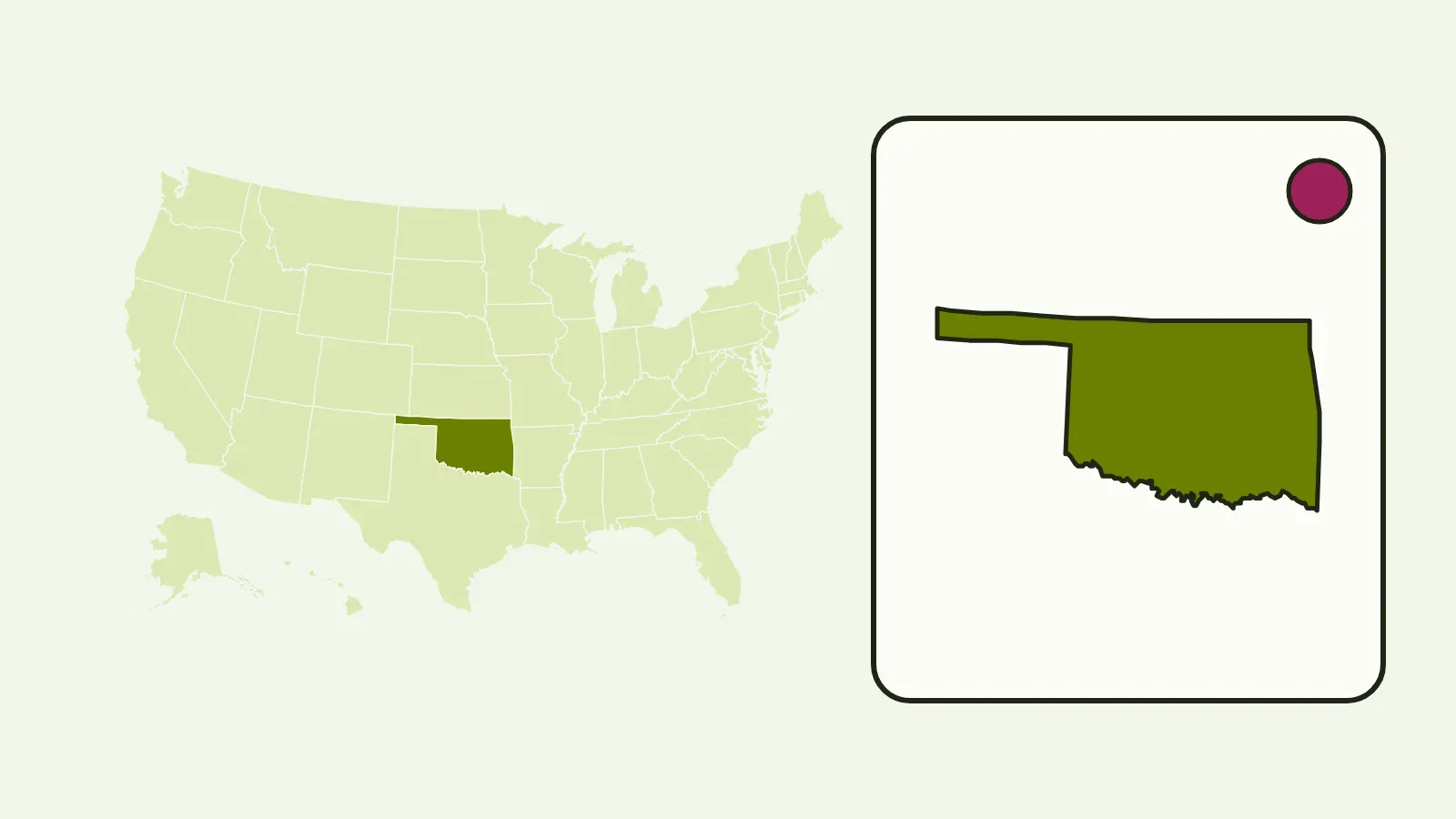
OSU Extension says Oklahoma's location lets grasses popular in the north, south, east and west be grown somewhere in the state. Summer heat and limited rainfall limit cool-season grasses to shaded areas and sites with irrigation, and winter cold rules out many warm-season grasses. Because both kinds grow here with effort, Oklahoma sits in the transition belt on the state map. OSU's own words lean warm-season for full sun, as the list below shows.
- Bermudagrass is, in OSU's words, the best-adapted grass for full-sun areas in Oklahoma, thanks to its heat and drought tolerance and enough winter hardiness. OSU says the coarser common-type cultivars suit home lawns because they need less fertilizing, mowing and dethatching.
- Buffalograss is the best choice for unirrigated lawns in western Oklahoma, according to OSU, and suits sites with 12 to 25 inches of rain a year.
- Zoysiagrass is winter hardy and tolerates light shade, but OSU calls its slow establishment its greatest liability.
- St. Augustinegrass can sometimes be grown in the extreme southern part of the state on sheltered sites, says OSU.
- Tall fescue, Kentucky bluegrass and perennial ryegrass suit shade or irrigated sites. OSU says they need more water than bermudagrass in summer to avoid wilting and thinning.
Mowing and feeding
OSU's one-third rule is the same as everywhere: never remove more than about a third of the leaf area in one mowing. Its fact sheet gives a height for each grass, and the warm-season grasses are cut higher in fall to insulate them against low temperatures. See lawn mowing for how the rule sets your schedule.
| Grass | May to August | September to April |
|---|---|---|
| Bermudagrass, fine-textured types | 0.5 to 0.75 inch | 1.0 to 1.25 inches |
| Bermudagrass, common types | 1.0 to 2.5 inches | 1.5 to 3.0 inches |
| Buffalograss | 1.5 to 3.0 inches | 2.0 to 3.0 inches |
| Zoysiagrass | 0.5 to 0.75 inch | 1.0 to 1.25 inches |
| St. Augustinegrass | 2.5 inches | 3 inches |
| Kentucky bluegrass | 2.5 inches | 2.5 inches |
| Perennial ryegrass | 2.5 inches | 2.5 inches |
| Tall fescue | 3.0 inches | 2.5 inches |
OSU's September 2026 bermudagrass calendar adds feeding limits. It says to soil test every three years, to fertilize based on the results, and not to apply phosphorus to lawns that already test adequate. Its quick-release program is up to 1 pound of actual nitrogen per 1,000 square feet, three to five times a year. Its slow-release program is up to 1 and 2/3 pounds, two to three times a year. The lawn supplies tool turns a rate like that into bags.
The 2017 fact sheet says cool-season grasses need most of their annual fertilizer in fall, a little in spring and very little in summer. It also says fertilizer applied after September 1 can stimulate lush fall growth on bermudagrass, which hinders its winterization. It advises watering only when the grass first shows wilt, then wetting the soil to a depth of 6 inches. See lawn watering and irrigation.
Digging and spraying rules
Okie811, the state's one-call center, publishes the Oklahoma Underground Facilities Damage Prevention Act. Under section 142.6, notice is to be given at least 48 hours before digging, excluding the date of notification, Saturdays, Sundays and legal holidays. The notice expires 14 calendar days from the excavation start date, and the center takes notices around the clock. The Act defines what counts as excavation and lists exceptions, so read those definitions on Okie811's site, or call when you are unsure. The steps are in call 811 before you dig.
For pesticides, the Oklahoma Department of Agriculture, Food and Forestry's pesticide page lists licensing, applicator certification, registration, examinations and a certification guide. OSU's Pesticide Safety Education Program lists category 3a, Ornamental and Turf, which covers applying pesticides within residential or business areas to lawns and to ornamental trees and shrubs. It also lists a Service Technician category for a person who applies pesticides for an applicator and is not the certified applicator themselves.
The pages read for this article do not say who must hold a license to spray a lawn for hire, and they do not state an Oklahoma rule on how a homeowner or a crew applies lawn fertilizer. Ask any company that offers weed or grub treatments for its license and category, and ask your city about local rules.
Local rules and hiring a crew
Cities, water utilities and homeowners' associations can add rules for grass height, watering and yard work. No particular city's ordinance is covered here, so read yours or ask the city office. The guide to HOA and city yard rules lists what to look for.
Mowing and basic yard work are not the same as spraying. Before anyone applies a product, ask for the license number and category, and get the product name and rate in writing. The guide to hiring a lawn crew lists what a written quote should say.
Questions people ask
What kind of grass do most Oklahoma lawns have?
OSU calls bermudagrass the best-adapted grass for full-sun areas. Cool-season grasses such as tall fescue are limited to shaded areas and irrigated sites, and buffalograss suits unirrigated lawns in western Oklahoma.
How much notice does Okie811 need?
The Act requires notice at least 48 hours before digging, excluding the date of notification, Saturdays, Sundays and legal holidays. The notice expires 14 calendar days from the excavation start date.
Which spray category covers lawns?
OSU's Pesticide Safety Education Program lists category 3a, Ornamental and Turf, for applying pesticides to lawns and ornamental trees and shrubs in residential or business areas.
Should I fertilize my bermudagrass lawn every year?
OSU's September 2026 calendar says to soil test every three years, fertilize based on the results, and skip phosphorus where the test is already adequate.
Sources
- Selecting a Lawn Grass for Oklahoma, HLA-6418 (Oklahoma State University, March 2017)
- Lawn Management in Oklahoma, HLA-6420 (Oklahoma State University, June 2017)
- Consumer Bermudagrass Lawn Management Calendar, HLA-6479 (Oklahoma State University, September 2026)
- Pesticide Applicator Certification Categories (Oklahoma State University)
- Pesticides (Oklahoma Department of Agriculture, Food and Forestry)
- The Law, Oklahoma Underground Facilities Damage Prevention Act (Okie811)
Checked on November 20, 2026. Licensing rules and local ordinances change; confirm with the Oklahoma Department of Agriculture, Food and Forestry, your county extension office and your city before you hire or spray.
Next in the yard
-

Yard job
Lawn mowing
How tall to mow, how often, and what a weekly visit includes.
-

Yard job
Lawn fertilizing
When to feed cool- and warm-season lawns, how to size a feeding, and what rules apply.
-

Yard job
Lawn watering and irrigation
How much water lawns need by belt, when to run sprinklers, and what an irrigation quote lists.